Dr Jose Martin Olmos Cesena
California Mexicana: Tourism in the Land of Guyiaqui
Long before the land had names and routes were marked on maps, I was part of everything. They called me Guyiaqui, keeper of the secrets of the fragrant land of Mexican California. Today I return, not as a shadow, but as a voice whispering to travelers: ‘Come and hear the story that still lives in Comondú.’
The Santo Domingo Valley is more than just a place. Here, the land seems to have a will of its own, producing as if guided by a force beyond understanding. In its fields, vegetables, fodder, and cereals grow that travel farther than those who harvest them can realize. But what is truly valuable isn’t the products; it’s the experience. Because those who arrive, if they know how to look and listen, not only see but also learn.
I have walked with the curious visitor—the one who prefers authentic experiences. I have taken them to make tortillas with their grandmother’s hands, press cheese on a family ranch, and gather sweet dates that fall like gifts from the sky. I have shown them how the children here greet each other with their eyes and how each family has its own story between the hearth and the furrow.
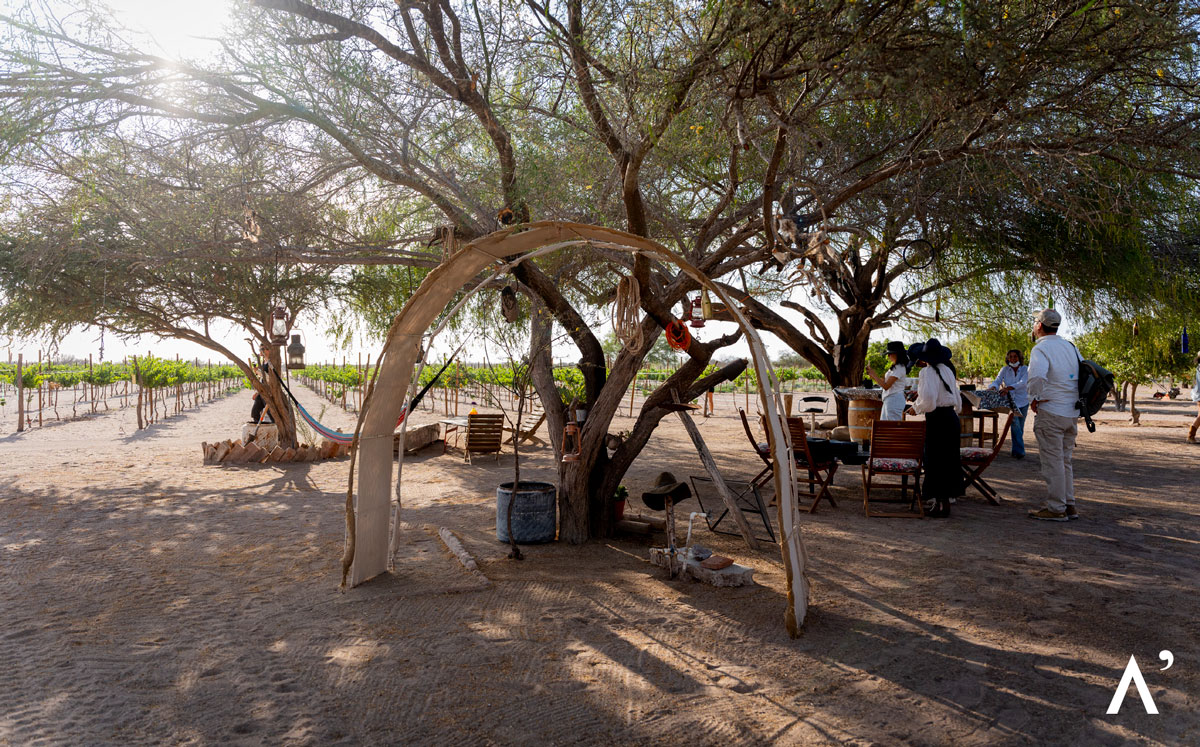
In recent years, I have seen the land reinvent itself. Where once there was only cotton, corn, or alfalfa, today, vines grow. Viticulture has taken root in this valley, not as a fad, but as a promise. Dessert Wine 5 and Viñedo Don Arturo are names already whispered by those who know good wine. Grapes with the soul of the desert are harvested on these lands, and their wines, although young, tell ancient stories.
I have joined tastings at sunset, where fresh ranch cheese, homemade bread, and ripe dates are paired with a local red wine during get-togethers that can only happen here. Because here, even wine has a strong identity.
An hour to the west, where the horizon is tinged with salt, is Puerto San Carlos. Every winter, the grey whales return, like me, to their origins. No one shows them the way. They remember it. And visitors remember it too when they see their backs emerge from the sea mist, when they feel their breath like an ancestral call.
From Ciudad Constitución, this is a short but meaningful journey: mangroves, fishing channels, and unnamed sands. By boat, kayak, or on foot, each step is a lesson in humility before living nature.
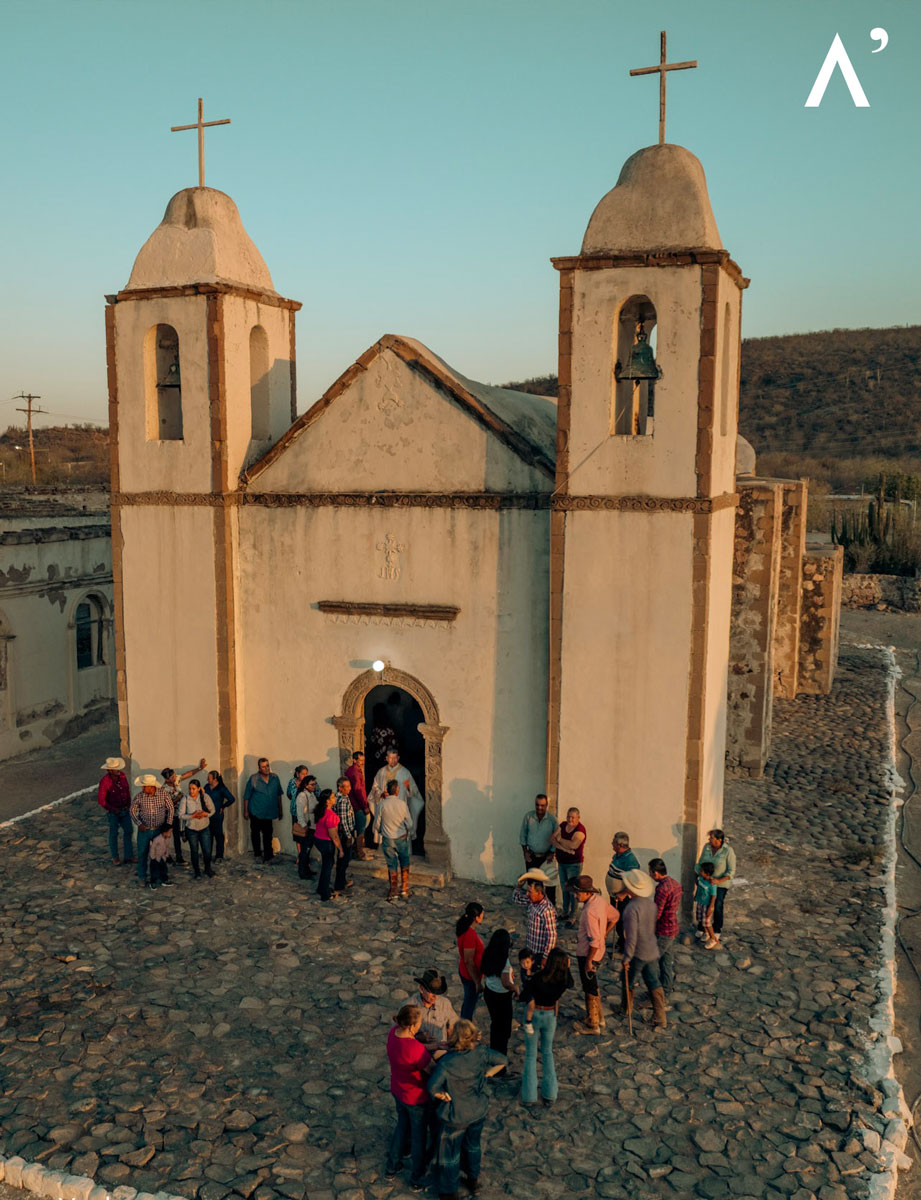

But if the sea teaches movement, San Luis Gonzaga teaches stillness. More than an hour away from the valley, among palm groves and orchards, lies this community where time still obeys the sun and the church bell. Founded as a Jesuit mission in the 18th century, San Luis Gonzaga has not lost its soul. It still smells of freshly baked bread and ripe citrus fruits. People still pray and sing.
I have taken friends to the old mission, established in 1737 by German Jesuit Father Lambert Hostell, leading to the mill and its dirt paths, where donkeys still carry water and children run around without fear. Here, tourism doesn’t just entertain; it transforms.
On ranches such as Sacramento or Cuatro Corrales, cooking is not a spectacle. It is a ritual. In every tortilla from the comal, there is a story. In every beef machaca, a journey. In every tamal ranchero, a grandmother. Those who sit down to eat at these stoves are not just passing through: they are returning home.
Here I have seen strangers cry when they taste bread that reminds them of their childhood, or when they participate in workshops where cheese is not only made but honoured. Because cooking here is not about preparing food: it is about telling who you are.
I have seen remarkable men and women from this region grow and succeed. I met one of them recently on a July morning during a conversation under the warm shade of a mesquite tree. I met Enoc Leaño, a man with curly hair, a generous mustache, and a clear gaze, whose voice is as transparent as his soul. He is in La Toba—officially Ciudad Insurgentes but known as La Toba because of social conviction, community affection, and shared memory— putting the finishing touches on the Third La Toba International Film Festival.
‘This is no longer just an event; it’s a pulse of the people,’ he said, spreading his hands as if explaining something felt more than reasoned. “Every year, there are more and more young people, more women, more people who have never seen cinema on the street before. That’s priceless. Cinema here doesn’t just entertain; it awakens.” And he’s right. This event is becoming an annual ritual, like the harvest or the patron saint’s festival.
La Toba will be transformed into a screen, a mural, a fair for the soul. Visual artists will arrive to paint the walls as if they were open pages, wrestlers will visit the streets, and workshops will be held where participants can learn to watch cinema not only with their eyes, but with their hearts. “We want people to see their own history reflected on that screen. We don’t want them to say ‘I went to the cinema, but “I am part of the cinema”.
Ciudad Constitución, San Luis Gonzaga, La Purísima, San Miguel de Comondú, and now La Toba are not destinations: they are chapters in a book that is still being written. They are routes that invite those who seek the truth. Because this piece of Mexican California is not visited, it is lived in.
“Guyiaqui” is the name of a mythological figure among the ancient Guaycura people. According to local legends, his name comes from the belief that he “planted the pitahayas and created the estuaries.” He is regarded as a god by the Guaycuras, who once lived on the peninsula. He is credited with shaping the local natural environment, including the pitahayas and estuaries.