C U LT U R E & A R T
“Preserving the Historic Center’s identity has been a collective, ongoing, and deeply human effort.”
“Born and raised in the heart of San José del Cabo, her story is intertwined with the memories and the community.”
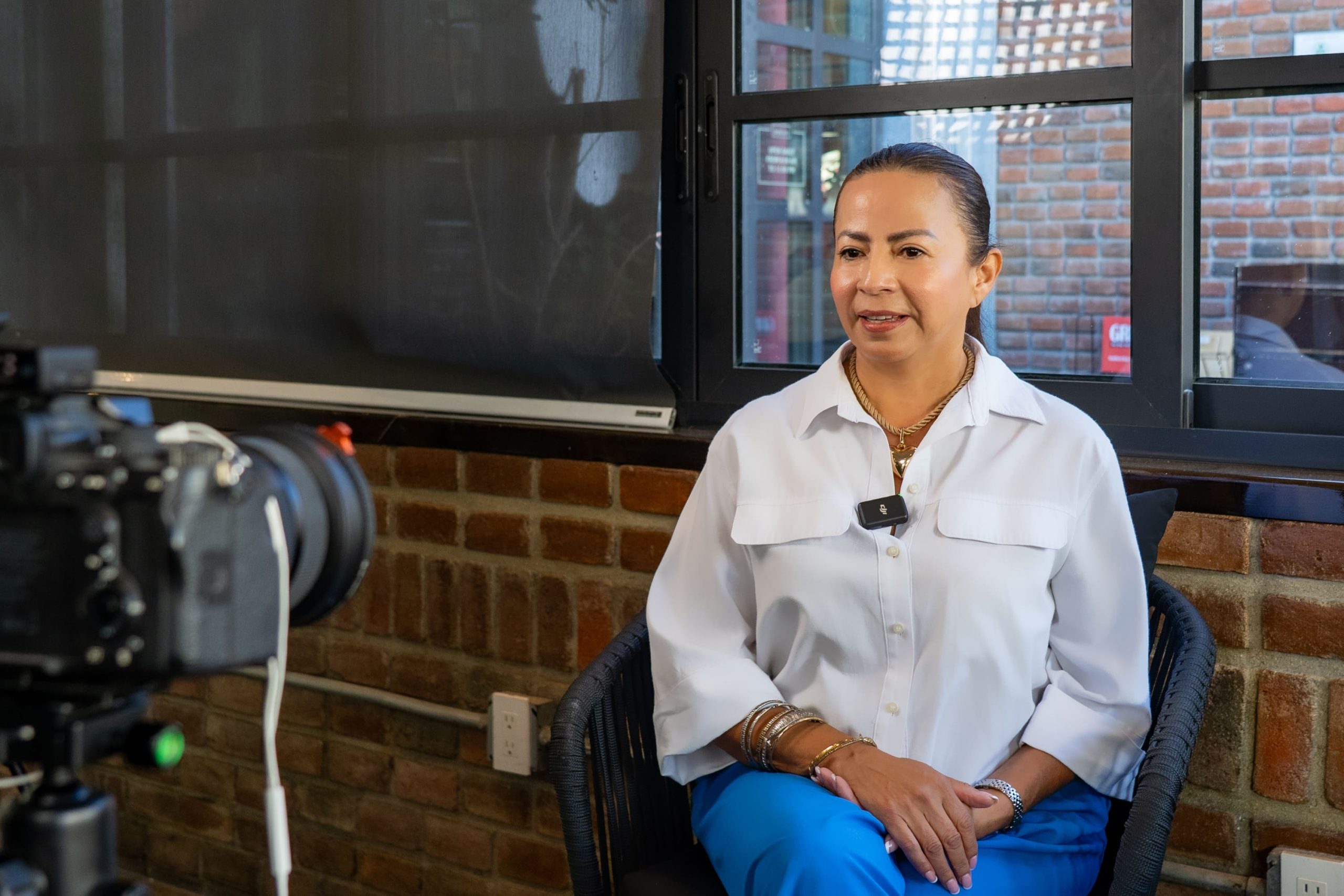
We are a very close-knit family of nine siblings—six women and three men. I am the youngest of the women. Today, only our father remains; he still lives downtown. My mother passed away 11 years ago. I grew up in the historic center. My home is just a few blocks from the Hotel Encanto Inn. Walking through San José fills me with nostalgia; I have many beautiful memories.
My father worked in agriculture and, in the afternoons, at the Hotel Palmilla, as he was also a musician and deeply loved music. My mother devoted herself to our home; she was incredibly kind and attentive. In Baja California Sur, people are exceptional hosts.
At 18, I began my journey in hospitality, working at Tropicana del Mar in La Jolla. Ángel Carbajal was my boss; I hold him in very high regard because he was a great mentor to me. He gave me my first important opportunity to stand out. I was very eager and curious—I worked in every area, filled in whenever someone didn’t show up, and was always ready to raise my hand. I believe that comes from the upbringing our parents gave us; having strong foundations is essential.
Later, I got married, had my first daughter, and became a full-time mom. I have two daughters, now 31 and 23 years old. Four years after my first daughter was born, I returned to work.
My Beginnings in the Hospitality Industry I then became fully involved in the operation of the Tropicana hotel restaurant. I loved being part of the operation, especially the creative side. At the time, it was one of the icons of San José del Cabo; we were pioneers in offering entertainment in the town center, along with excellent cuisine. We were the meeting place for breakfasts, lunches, and lively evenings.
For me, it felt like welcoming people into my own home. Sometimes I would wake up in the middle of the night with ideas. I coordinated with the manager, the chef, and the rest of the team involved. It was incredibly fun. We were always looking for artists—local, national, and international. It was a great success. It’s important to note that back then, there were no social media platforms. Tropicana marked a turning point, socially and in many other ways, because we constantly introduced new projects and ideas. Both locals and tourists embraced us.
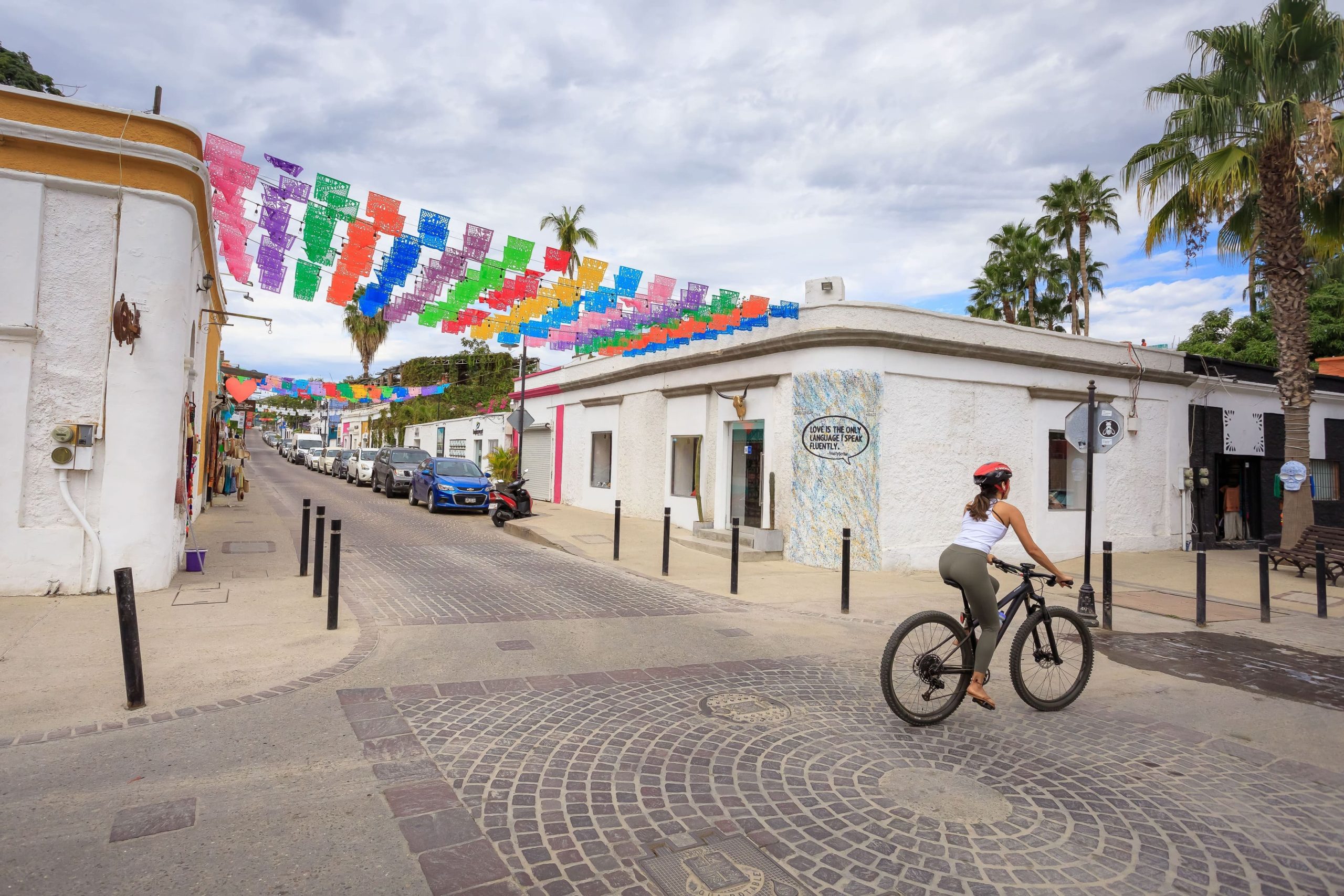
Working Toward a Shared Identity After years of hard work, I was invited to join the Historic Center Association. For me, it was important to be part of preserving our values, history, and culture so they would endure over time and maintain the identity of my hometown,.
The initiative began with a group of people from diverse professional backgrounds— hoteliers, merchants, and restaurateurs—who shared the desire to come together to preserve our essence. The group grew quickly, with everyone contributing in their own way. We were very clear that we needed to work on improving tourist flow.
Our goals were definitely to preserve our identity and to work alongside the government, because we couldn’t do it alone. We also sought to raise awareness among business owners and residents, encouraging them to join the vision we wanted to share with the world. We know that visitors value learning about local culture. Eventually, the Art Walk began, along with projects such as a Gastronomic Route.
It was essential that everyone fully believed in our purpose. My contribution was to collaborate on projects and help communicate them. We understood how important connection and collaboration were. The effort behind it all was monumental: we met weekly with around 80 business owners. Every Monday was a working meeting, and sometimes we had to bring order—imagine how many ideas were being generated.
Later came the opportunity to remodel the historic center. As with any project, there were controversies, but what mattered most was that we were clear on our objective—and we achieved it. The effort of everyone involved was tremendous; they remained persistent and committed to seeing the project through.
And now, look at how beautiful it is: visitors can walk along wide sidewalks without poles, with proper lighting and security—everything working seamlessly, coordinated, and thoughtfully designed. It was incredibly important.
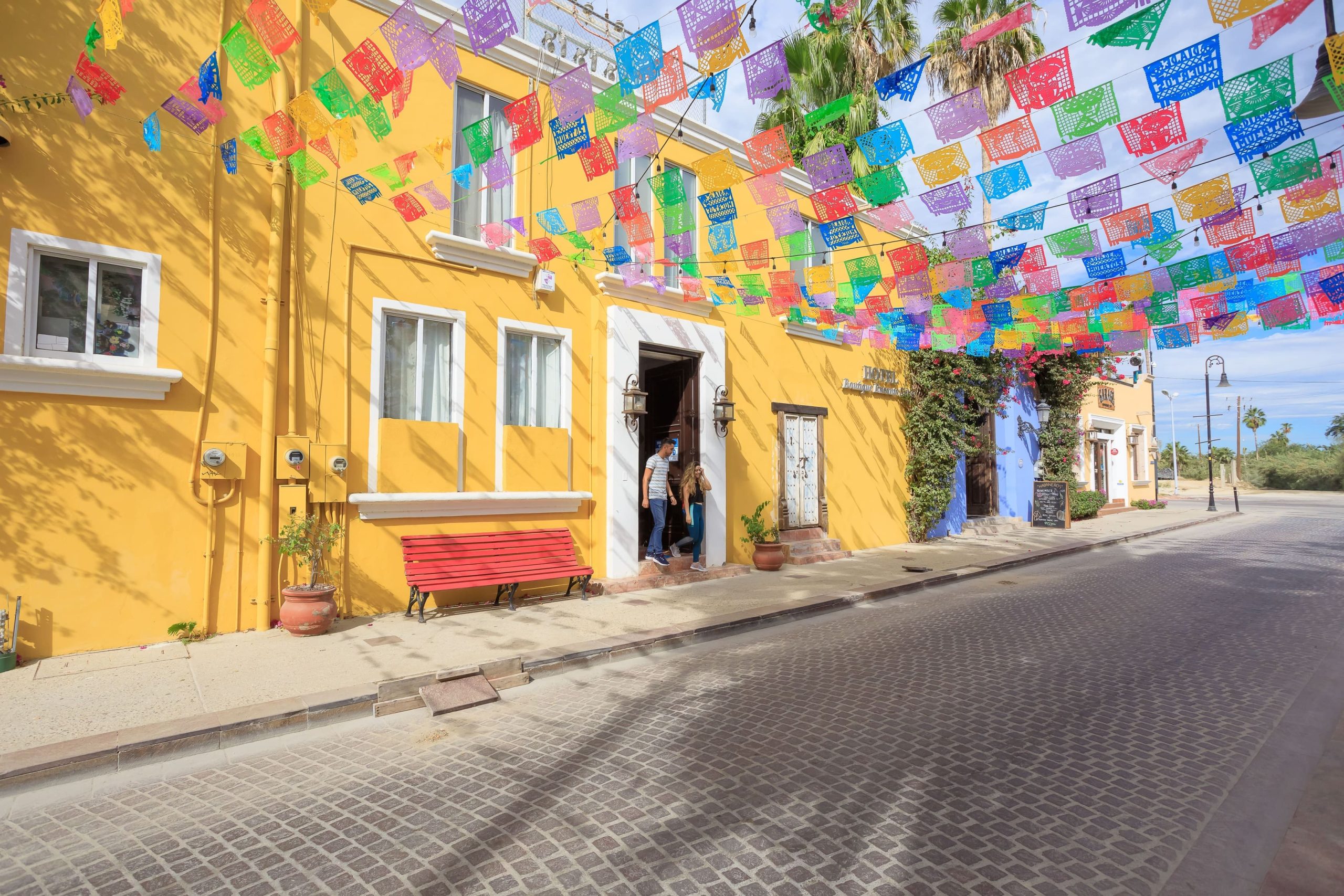
The Importance of Continuity and Collaboration The greatest challenge for the association is coordination with the government and local business owners, as we are currently responsible for maintaining the Historic Center’s infrastructure. There are still challenges to address, but I am confident that the board of directors will continue working persistently, proposing new ideas and projects.
The historic center will experience renewed growth, especially because the board remains firmly committed to continuity. This is work we have carried out for years, through constant dialogue between the association and the government. The benefit must be shared by everyone—business owners, the community, and visitors—so that we all gain collectively.
I am proudly from San José del Cabo and a member of the Historic Center Association because I want to help preserve the city’s identity. If I may humbly add one thing, it is that I truly want everyone to do well.