
Winter arrives in Cabo San Lucas without announcement. It doesn’t fall like snow or settle on rooftops; it slips into the salty air, sharpens the wind, and draws the sea into a darker mood.
That night, the beach was nearly empty. A few boat lights swayed like tired thoughts, and the waves broke with ancient patience. That was when someone saw her.
First came the song—not a melody, but a long, steady breath, a murmur that seemed to rise from the depths of the ocean. Then the silhouette: a woman dressed in white, standing on a rock near El Arco, where the sea opens like a luminous wound.
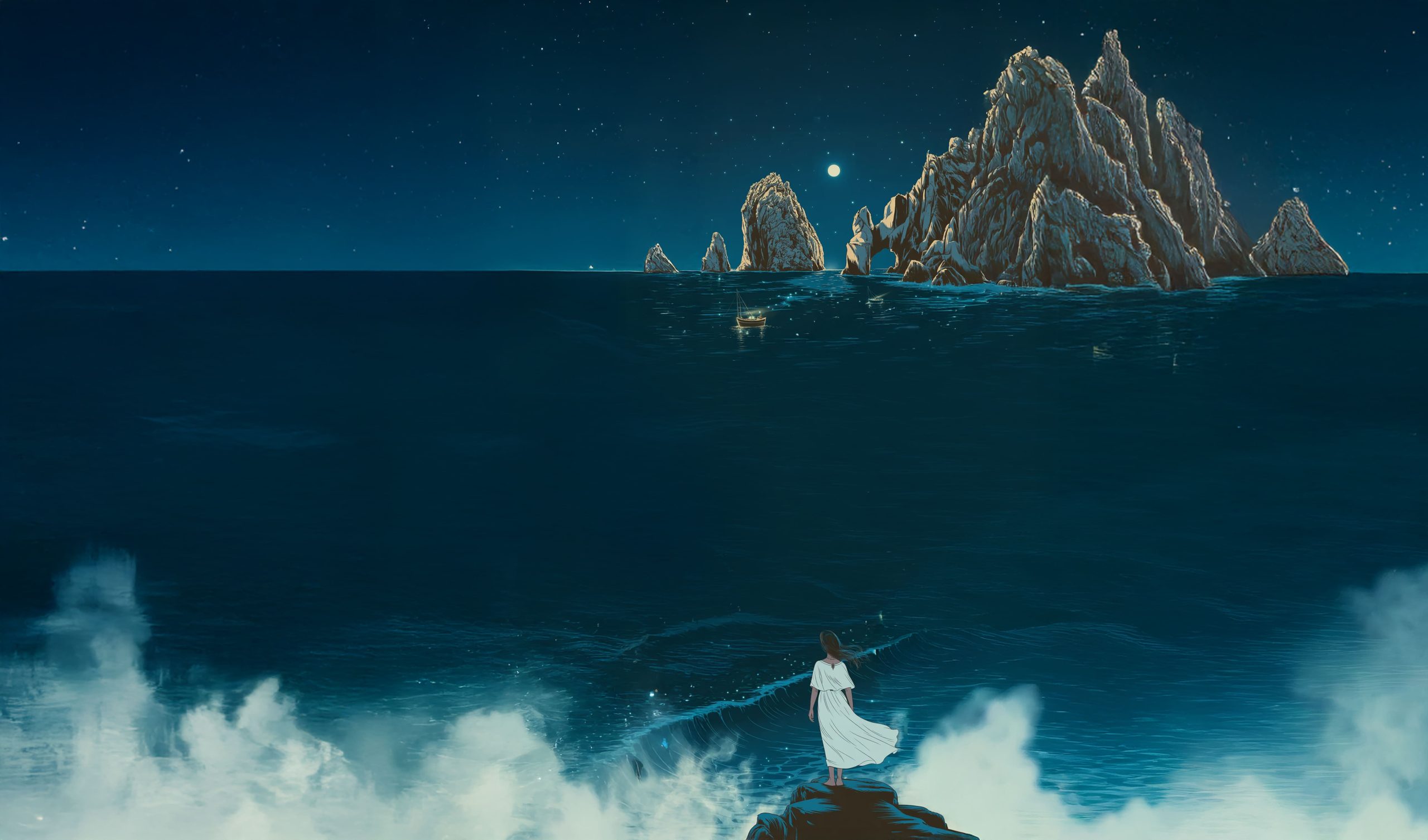
She wasn’t walking. She didn’t need to. The water held her, as if it recognized her. They say she waits.
That every winter she returns to hear whether the sea will finally give back what it once took from her.
Many years ago—when Cabo San Lucas was little more than a handful of houses and promises—she loved a man whose life belonged to the ocean. He left one dawn much like this one, with the wrong wind and an unfinished goodbye. The sea took him without violence, as it takes everything it believes is its own.
Since then, when the cold sharpens the nights, she returns. Some say she protects fishermen; others believe her song is a warning. What is certain is that after she appears, the sea changes its mood. It either grows eerily calm or turns fierce without reason.
The elders say you shouldn’t look directly into her eyes— not because she’s dangerous, but because her gaze holds a truth too heavy to carry. Sometimes she lingers, waiting, until she dissolves into the tide itself.
At dawn, the woman disappears. Only the sound of the water remains, softer now, as if someone had managed, for a few hours, to persuade the sea to remember.
And every winter, when the wind shifts once more, Cabo San Lucas knows she will return.
Because some stories don’t seek an ending.
They only ask to be heard.