Enoc Leaño and the cultural guerrilla movement from La Toba
Enoc Leaño, an actor, director, and cultural manager from Ciudad Insurgentes, Comondú, has established deep roots in La Toba through his work in art and memory. He is dedicated to promoting a film festival along with a broader cultural project aimed at igniting the desert with imagination, identity, and community. With a strong background in film, theatre, and television, Leaño has excelled in antagonistic roles across various networks, including Canal Once, TV Azteca, Televisa, and Telemundo.
In the interview, Enoc discusses the significance of the La Toba International Film Festival as a tribute. “It’s not just about programming films; it’s about honouring those who came before us, those who built the town from the ground up following a presidential call to populate the area after World War II,” he explains. Leaño comes from a family of migrants; his father arrived from Tijuana, and his mother came from Chihuahua.
His encounter with a Buddhist man who had preserved more than three thousand years of genealogical records marked a significant turning point in his life. This deep respect for his ancestors inspired him to translate that spiritual impulse into tangible action: the festival was created to honour his lineage, particularly his mother, to whom he dedicated the first edition.
“I have to honour my grandparents and my mother; that’s the reason this festival began. If I am the tip of this spear, behind me stand my parents, my grandparents, and my great-grandparents. It’s a significant legacy that is driving me forward.”
Each year, the festival has continued to build upon its collective memory. One of the most significant actions taken was the installation of commemorative niches dedicated to the community’s ancestors, both living and deceased. Enoc placed a niche in honour of his grandfather, Pancho, who brought the first cotton gin to the community. He also remembered an 8 mm film shot by his other grandfather in 1955, which is currently being restored. The goal is to preserve a living history that might otherwise be lost.
The festival carries a deeply intimate spirit, serving as a heartfelt response to the challenges of losing territory and identity amid rapid urbanization and cultural upheaval in the northern regions of the country. He acknowledges the harsh realities many face, stating, “Emotional poverty, lack of opportunities, and forced migration are everyday struggles for countless families.” It’s a poignant reminder Tendencia El Arte de Viajar of the resilience required to navigate such difficult circumstances.
In this context, cinema serves as an emotional archive—a tool that can plant ideas in the collective unconscious, particularly in areas often excluded from the nation’s central narrative. According to Enoc, the festival has succeeded in moving people by awakening their intuition, sense of wonder, and memories.
One of the most emotional moments for him happened during the first edition when he took the stage to thank his mother, his wife, and his son. He remembers asking his mother to say something, and she replied, “Thank you for not leaving him alone.” That simple yet powerful moment left a lasting impression on him.
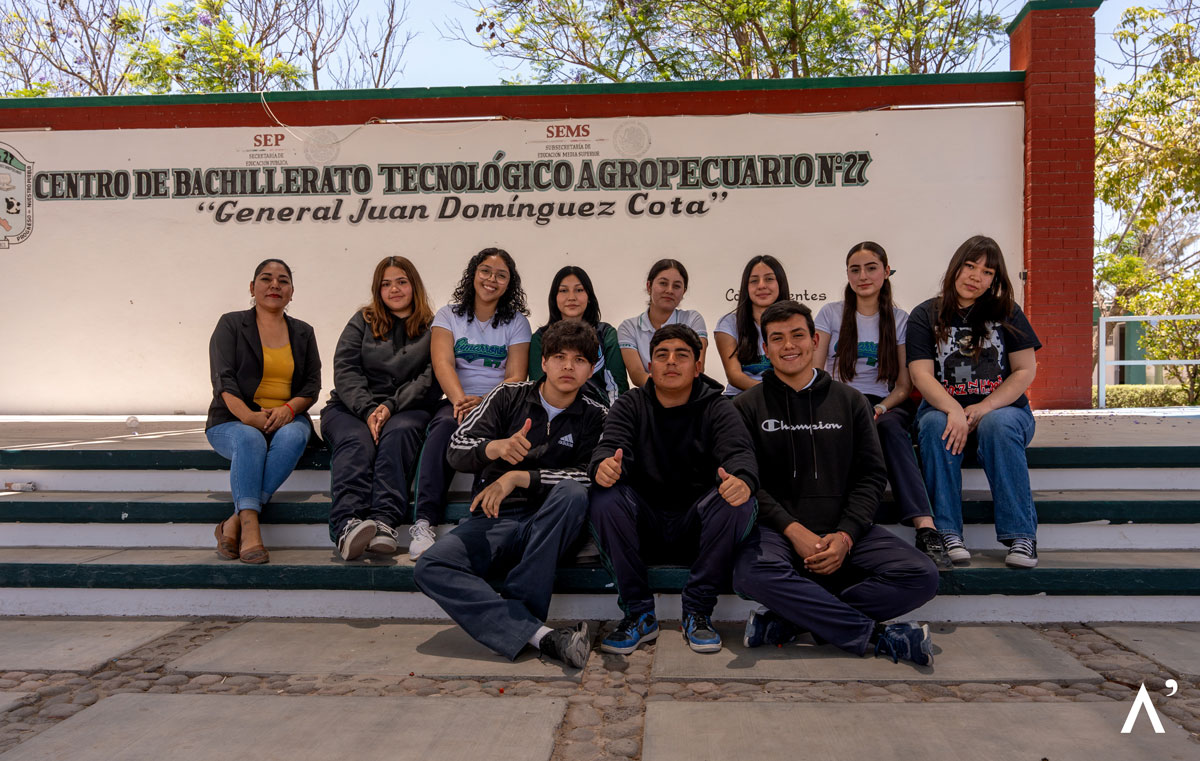
Alongside the film program, the festival has also encouraged the creation of community murals. So far, three murals have been completed, and a fourth is planned for this year. One mural was created by Carlos Maciel, known as ‘Kijano,’ at CBTA 27, a high school near La Toba. Another mural, painted by Antonio Rodríguez, is located next to a court near the petrol station. Additionally, there are plans to renovate the water tank, which currently appears rusty, to redefine the everyday landscape of the town.
The event also features a film screening using 9 mm hand-cranked projectors, a collaboration with the Museo del Santo, and a themed catwalk where children will dress as wrestlers. Enoc believes that art and culture should not be hierarchical or exclusive to academic elites. He argues that all knowledge should be made accessible to a broad audience, as otherwise, it loses its purpose.
‘I argue a lot with intellectuals. Everything has to be down-to-earth. If it can’t be translated for the community, then I don’t invite them. It’s that simple. I’m being selective, forgive me.’
In the future, he envisions having a cinema and a theatre, sculptures scattered throughout the village, and, most importantly, seeing artistic talents flourish from the workshops at the festival. He hopes that someday, someone will tell him that they discovered their passion for art thanks to La Toba.
He honestly recognizes that he may not accomplish all his goals, but he believes he will be able to look his son in the eye and say that he did everything within his power. This commitment comes not from pretension, but from a genuine belief in what he describes as “cultural guerrilla warfare.”
A gesture of sowing seeds and rebellion in the heart of the desert.
My father worked for an American company that produced cotton bales. He was the manager, and our whole family moved with him; there were three of us: my older sister, my brother, and me.
I didn’t like the change because I had been living in a big city when we moved to the desert. There was no electricity, no water, and nothing at all. The transition was very sudden, and adapting was not easy. I met my husband at a dance held in someone’s home.
At that moment, she recalled how he had asked her to dance. Her family had also arrived with a group from Tijuana when General Agustín Olachea distributed land. They had seven children: Elia, Anita, Enoc, Edgar, Esmeralda, Everardo, and Eloy.
My children grew up here and attended the only school in the area. When my youngest was 40 days old, we moved to Tijuana, where we lived for eight years. However, we did not adapt well and preferred to return.
When did Enoc’s interest in becoming an artist begin?
Initially, he decided to pursue a career in teaching and enrolled in a teacher training college in La Paz. After completing his studies, he went to the mountains of Sinaloa to fulfill his community service requirement. During this time, he discovered a student school in Mexico City that was attendance-based, and he didn’t hesitate to relocate there. He would return home for long holidays, such as Christmas and New Year’s. It was difficult for us because he lived so far away and only came home twice a year.
The first novel I saw him act in was “Nada Personal.” It made me very sad because his character was killed at the end. In the scene, he is thrown from above and falls onto barbed wire, becoming all tangled up. I felt awful, especially with everyone telling me they had killed my son. However, when I spoke to him a few days later, I felt very calm.
From that moment on, opportunities arose for him, and he gradually ascended to his current position.