Baja California Sur accounted for 41.4% of Mexico’s Tourism Foreign Direct Investment during the first half of 2026. Against this backdrop, experts, business leaders, and industry representatives will analyze the challenges and opportunities surrounding the state’s continued tourism growth.
Baja California Sur has consolidated its position as one of Mexico’s leading destinations for tourism investment. During the first half of 2026, the state recorded $511.9 million in Tourism Foreign Direct Investment, representing 41.4% of the national total.
Against this backdrop, the Mexican Institute of Finance Executives (IMEF) will hold the sixth edition of its Tourism Forum on October 15 at Hacienda del Mar Los Cabos, under the theme “Tourism as a Driver of Investment and Development.”
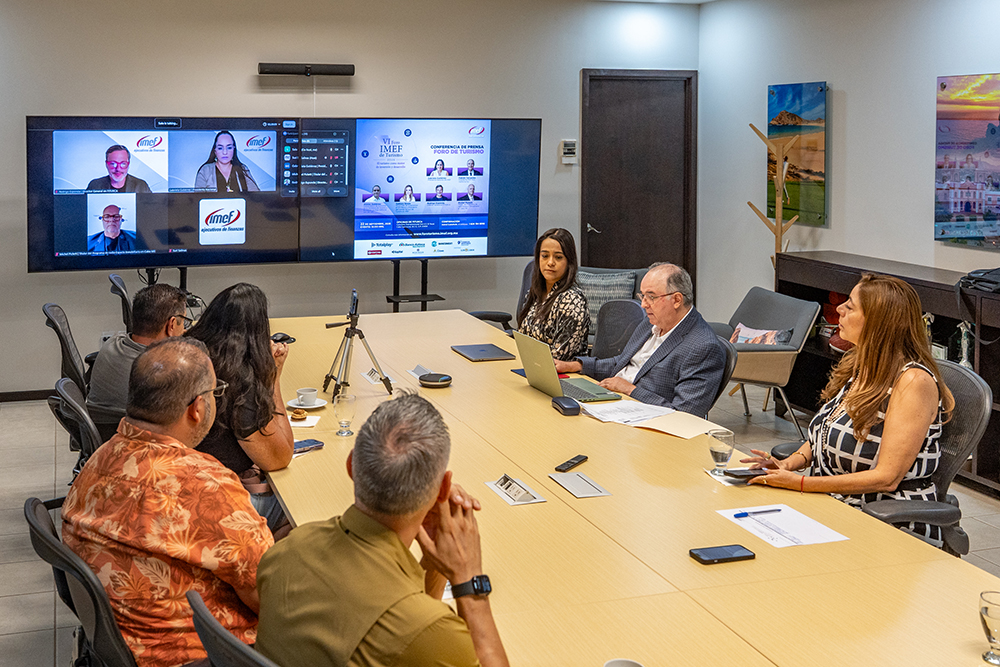
During the forum’s presentation, representatives from IMEF and the tourism industry emphasized the importance of examining not only the sector’s growth, but also the conditions required to sustain it, including investment and financing, infrastructure, energy, telecommunications, connectivity, group tourism, sustainability, and the economic outlook.
Gabriela Gutiérrez Mora, national president of IMEF, highlighted the growing relevance of Baja California Sur within the organization and noted that Los Cabos has hosted the forum’s various editions because of the destination’s importance to Mexico’s tourism industry.
The event aims to bring together business, financial, and institutional perspectives to foster dialogue that contributes to informed decision-making and long-term economic development.
Tourism and Investment: A Strategic Relationship
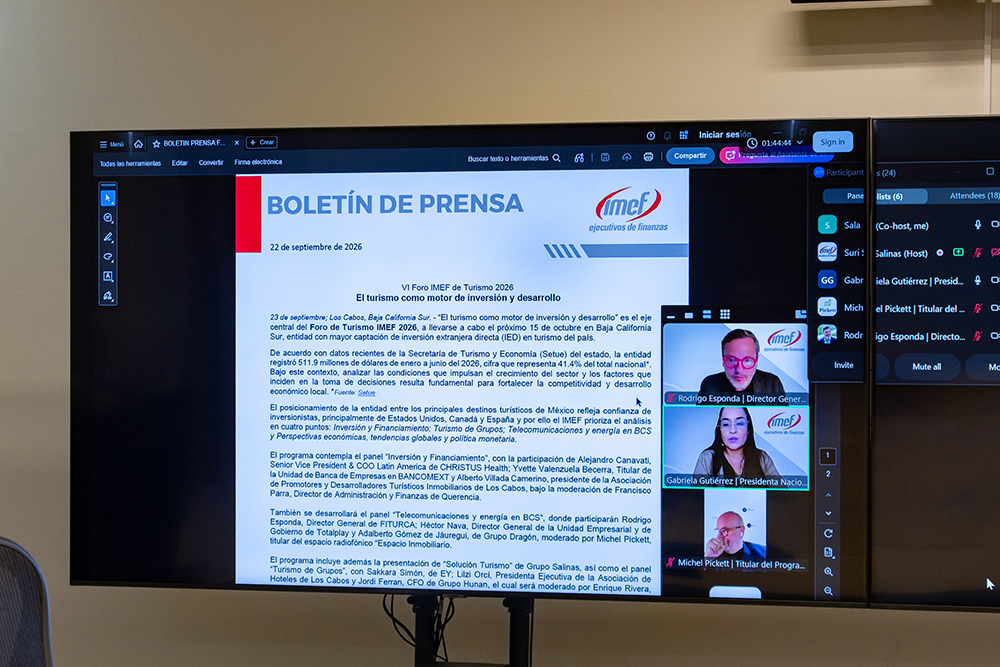
The level of investment coincides with the momentum of the state’s economy. During the press conference, Rodrigo Esponda Cascajares, Managing Director of the Los Cabos Tourism Board (FITURCA), noted that Baja California Sur ranked among the states with the strongest economic momentum in the country during the first quarter of 2026, driven primarily by service-sector activities.
According to Esponda, tourism’s performance has implications that extend well beyond the industry itself, given its ability to attract investment, generate economic activity, and contribute to revenue generation.
Investment will therefore be one of the forum’s central topics. The program includes a panel on investment and financing, featuring experts from the financial, real estate, and service sectors.
Another key topic will be group tourism, a segment in which Los Cabos maintains a significant position, particularly in the incentive and luxury travel markets

Energy and Telecommunications: Challenges Accompanying Growth
Tourism development also creates increasing infrastructure demands.
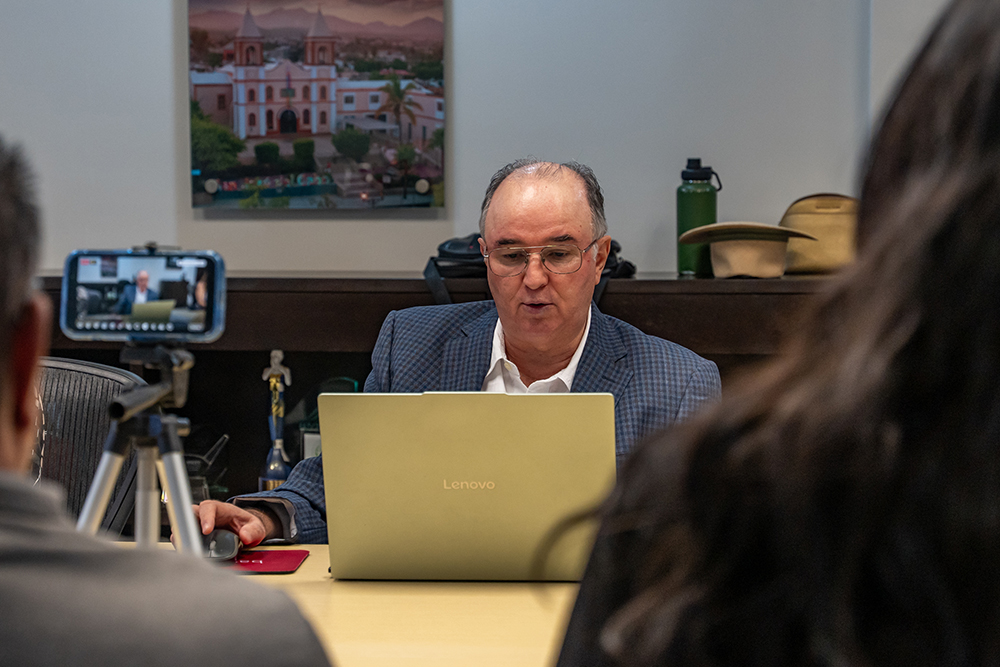
During the presentation, Michel Piquet, founding member of IMEF Baja California Sur, addressed one of the challenges facing the state: ensuring sufficient energy and telecommunications capacity to support continued real estate and tourism growth.
The issue will be discussed during the panel “Telecommunications and Energy in Baja California Sur,” featuring private-sector specialists alongside Rodrigo Esponda and moderated by Piquet.
The discussion is particularly relevant as new developments continue to emerge and infrastructure needs increase alongside the destination’s economic and population growth.
Medical Tourism Joins the Conversation
For the first time, the IMEF Tourism Forum will also include medical tourism on its agenda.
The discussion will explore the opportunities this segment represents for Los Cabos, as well as its relationship with the local community’s need for expanded healthcare infrastructure.
In this way, the forum will broaden the conversation beyond the visitor experience to examine how tourism-related investment can also help strengthen services available to those who live in the destination.
Sustainability and Local Communities
Sustainability will be another cross-cutting theme throughout the forum.
During the press conference, participants emphasized that tourism growth should consider not only environmental criteria, but also how its benefits can extend to producers, rural communities, and small businesses connected to the tourism value chain.
One example discussed was the farm-to-table model, which has helped connect part of Los Cabos’ culinary offering with local producers while creating new opportunities around the visitor experience.
IMEF also raised the possibility of expanding its analysis of these issues through collaboration among its technical committees on tourism, ESG, corporate governance, and finance, with the goal of generating information that contributes to better decision-making.

Looking Ahead at the Economy
The program will conclude with a keynote presentation on economic outlooks, global trends, and monetary policy as they relate to decision-making in the tourism industry, presented by Dr. Julio Santaella, advisor to the Governing Board of the Bank of Mexico and distinguished member of IMEF.
The sixth edition of the IMEF Tourism Forum is expected to bring together approximately 250 participants, including business leaders, specialists, government officials, and representatives from strategic sectors.
Rather than focusing solely on tourism’s current performance, the event will examine the conditions needed to sustain its growth in the years ahead.
In a state where tourism continues to be one of the main engines of the economy, the conversation is becoming increasingly comprehensive: it is no longer simply about attracting more investment and visitors, but about creating the infrastructure, financing, connectivity, and sustainability conditions needed to turn that growth into long-term development.