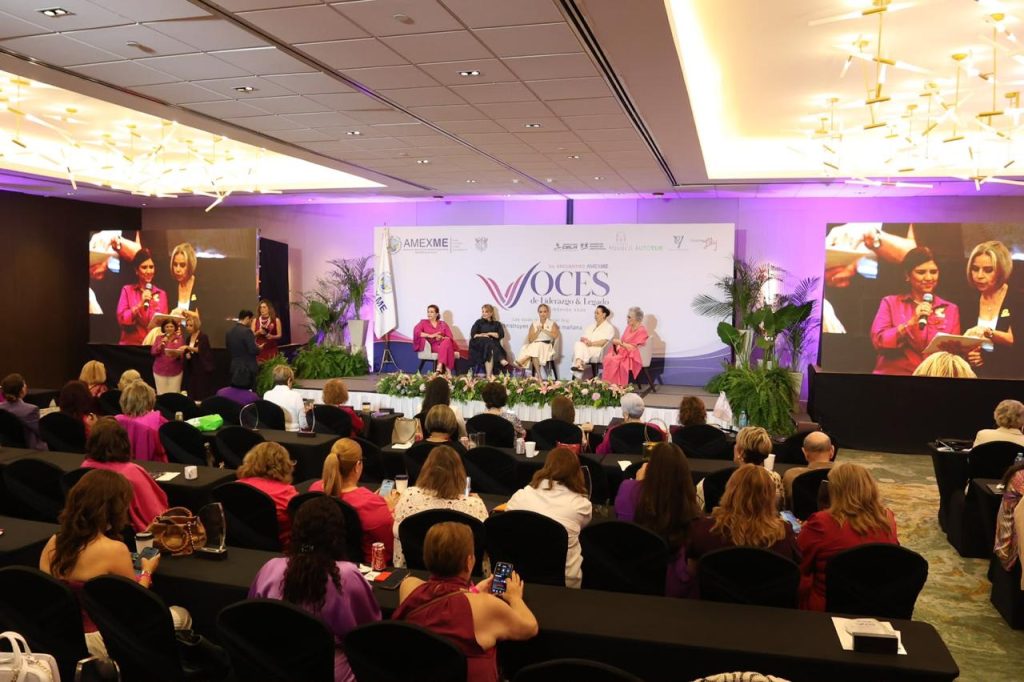
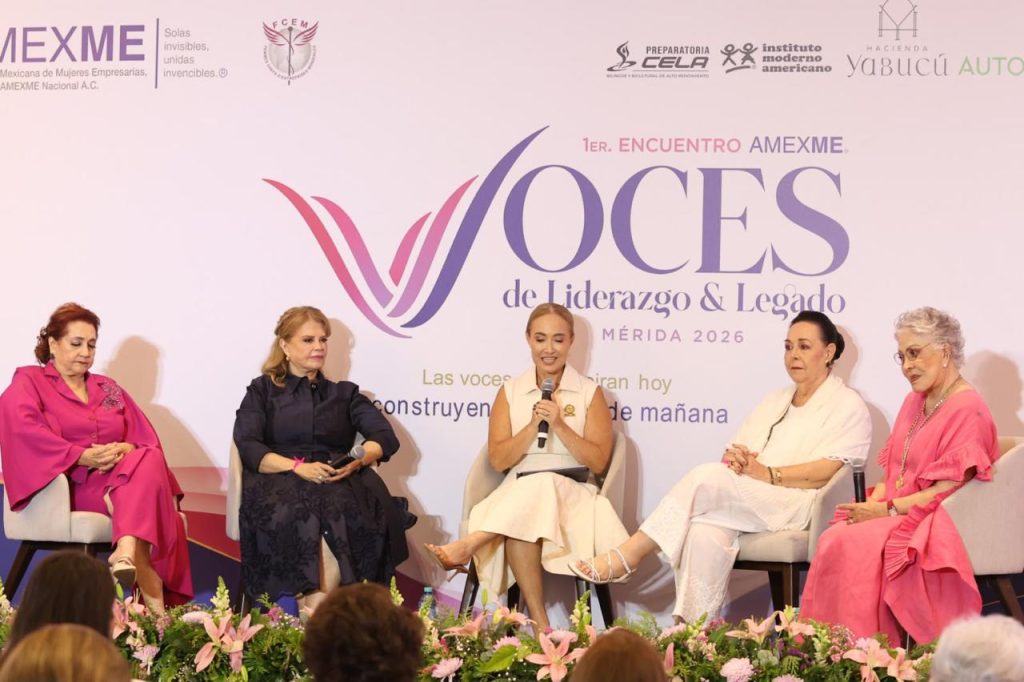
In Mérida, four former national presidents of AMEXME shared the decisions, crises, and lessons that reveal how an organization of businesswomen has managed to evolve and endure for 61 years.
An association is not sustained by bylaws alone. It is sustained by people willing to begin when very little yet exists, defend it during difficult times, document what has been learned, and, above all, pass on the responsibility so that someone else can continue.
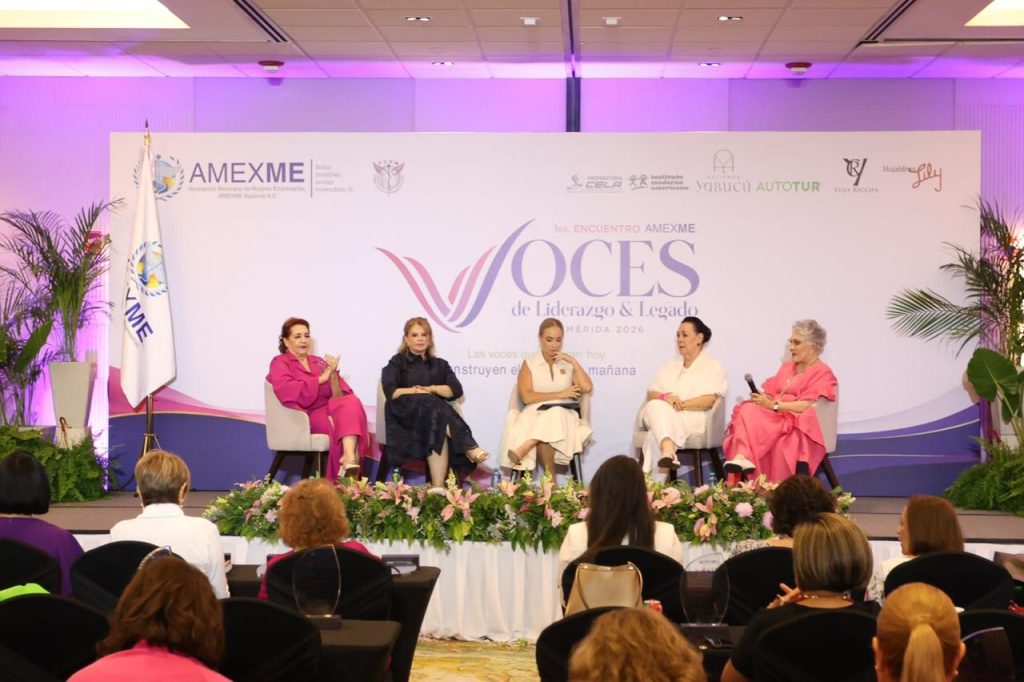
That was one of the central reflections of the panel held during the First AMEXME Gathering: Voices of Leadership and Legacy, in Mérida.
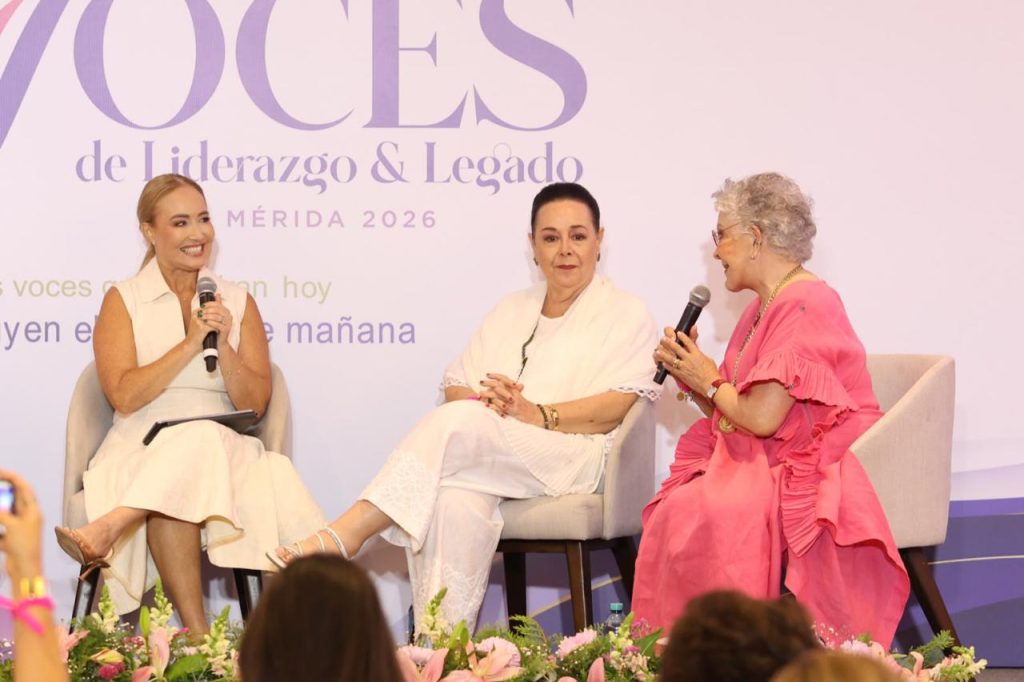
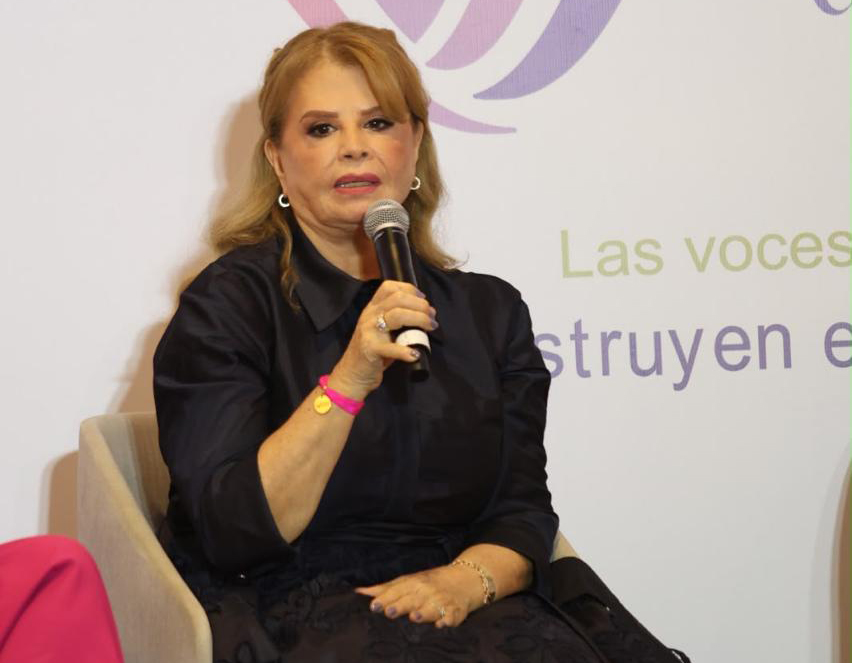
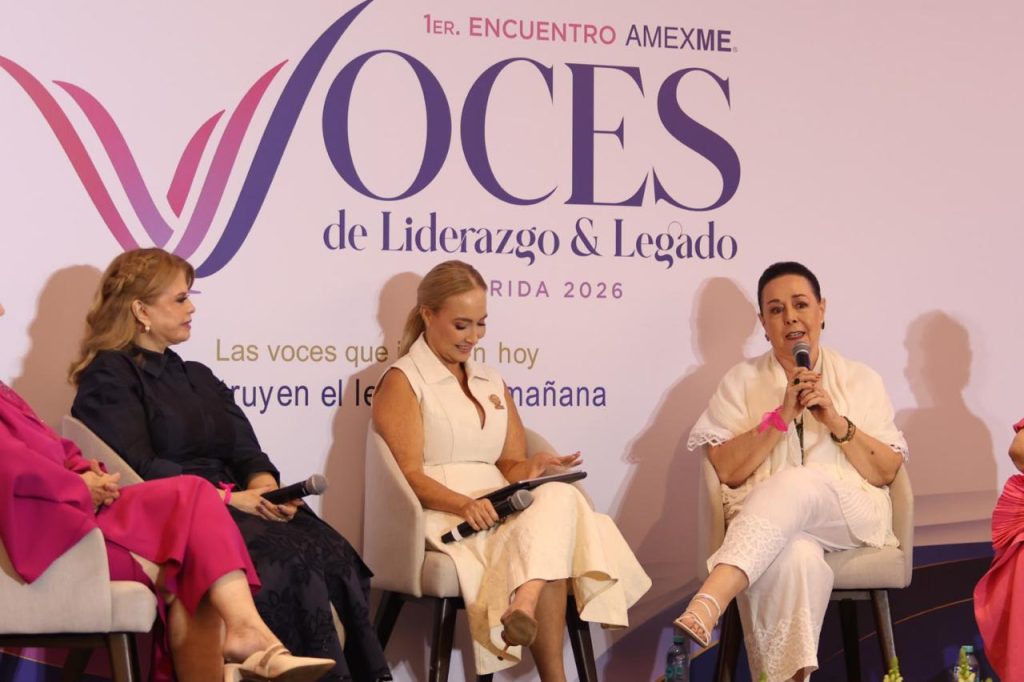
Judith Yanini Flores, María del Carmen García Noemí, Ana María Sánchez Sánchez, and Lucero Cabrales García Conde, former national presidents of AMEXME, shared the stage in a conversation moderated by Ivette Bonifaz Famanía, the association’s national president.
Through their stories, they brought to life an institutional memory shaped by hard work, friendship, differences, family sacrifices, and a shared conviction: no woman should feel alone while building her business and seeking to claim the spaces that rightfully belong to her.
Before Becoming Visible
Judith Yanini Flores’s calling also grew from an early awareness of the importance of organizing. Her father, a businessman and amateur radio operator, communicated with people in different countries. Through him, she learned about the role European women played after World War II and discovered the existence of women’s business organizations.
Years later, a sign for an association of businesswomen caught her attention. Although she already led an organization of more than one hundred insurance agents, she was initially seen merely as an agent rather than recognized as the businesswoman she truly was.
That experience strengthened her commitment to helping other women generate their own income, achieve financial self-sufficiency, and gain the freedom that comes from being able to make decisions about their own lives.
María del Carmen García Noemí grew up surrounded by women. Her family history, shaped by Lebanese migration and a strong matriarchal tradition, allowed her to recognize from an early age the entrepreneurial abilities of women who supported businesses and families without necessarily receiving recognition.
In the stores of Mérida, she saw women managing operations, purchasing merchandise, serving customers, and making decisions, yet they continued to be identified only as wives, sisters, or daughters.
“They were the ones buying and selling, yet they did not own a single share in their family businesses,” she recalled.
That reality inspired her to help establish the AMEXME Yucatán Chapter in 1998. The goal was to bring these women together, recognize their economic contributions, and ensure their opinions were heard.
Lucero Cabrales García Conde’s arrival at the association was shaped by a series of coincidences. After her jewelry was stolen, she received an invitation to attend an exhibition. Although the invitation had not been intended for her, her daughter encouraged her to go.
There, she met María del Carmen, who asked her a seemingly simple question:
“Are you a businesswoman?”
Lucero ran her own school and wanted to connect with women who understood the demands and responsibilities of leading a business. She joined in search of friends and found a community that would transform her life.
Building an Institution
Ana María Sánchez Sánchez began by helping prepare the meeting minutes for the AMEXME Culiacán Chapter. She later became secretary and, in 2004, was elected chapter president. The results achieved by her board led the members to ask her to remain for a second term.
From those years, she carries one essential lesson: leadership roles within an association are temporary.
“We must not take ownership of the chapters. Another woman must come forward with new ideas and make the association even greater.”
Judith Yanini promoted the organization’s federalization and contributed to its expansion across different regions of the country. One of the most significant milestones was the 2002 FCEM World Congress in Mexico City, which opened at the National Museum of Anthropology and concluded with a gala dinner at Los Pinos, the presidential residence.
María del Carmen, for her part, championed the need for a national organization to have a physical presence in the country’s capital. During her tenure, an office was established on Paseo de la Reforma, creating a space where businesswomen from different states could meet, showcase their products, and build commercial relationships.
It was about more than simply having an address. The office represented presence, identity, and a sense of national belonging.
Ana María would later face another challenge: organizing a World Congress without relying on government funding. Convinced that they could accomplish it, she offered her own credit card as a guarantee.
The gathering fulfilled its international commitments and generated funds for the association. Beyond the financial outcome, it established a powerful certainty: businesswomen could undertake large-scale projects through planning, trust, and collective effort.
Su gestión también alcanzó uno de los espacios internacionales más relevantes para la agenda económica de las mujeres. En abril de 2017, Ana María participó en la Cumbre W20 (Women 20), celebrada en Berlín bajo la presidencia alemana del G20 y el liderazgo de la canciller Angela Merkel. El encuentro buscó impulsar la equidad de género y el empoderamiento económico de las mujeres dentro de la agenda de las principales economías del mundo.
En ese momento, Ivett Bonifaz era presidenta de AMEXME Capítulo Los Cabos y tuvo la oportunidad de acompañarla. Años después, ambas volvieron a coincidir en Mérida, ahora con Ivett al frente de la presidencia nacional. La escena trazó un puente simbólico entre dos momentos de la asociación: quien entonces acompañaba a la presidenta nacional en una representación internacional conducía ahora una conversación destinada a preservar y transmitir aquel legado.
A Crisis That Forced a Rebirth
One of the most delicate moments in the organization’s history involved ownership of the association’s former acronym.
The crisis made it necessary to legally protect its identity, register a new name, and safeguard the continuity of a history built over decades. Ana María led part of that defense and promoted the registration of the AMEXME name and its motto.
Lucero later became the first national president to lead the organization fully under the AMEXME name.
For many members, saying goodbye to the former acronym meant closing a deeply meaningful chapter. During one gathering, they held a symbolic ceremony in which they tore up pieces of paper bearing the previous name as a way of bidding it farewell.
There were tears and resistance, but there was also a shared decision to move forward.
Just as the new name was beginning to take hold, the pandemic arrived. Meetings, congresses, and chapter visits were suspended. Technology made it possible to keep the organization united, move forward with the legal transition, and strengthen communication that, until then, had relied primarily on in-person interaction.
Lucero understood that the transformation had to endure beyond her presidency. Together with a team of fifteen women, she therefore promoted the creation of the Strategic Framework: a guide designed to preserve the organization’s processes, knowledge, and institutional standards.
“What will happen to all of this when I leave? Will it be put away in a drawer and forgotten?” she remembered asking herself.
The goal was to ensure that no president would ever have to start from scratch again.
The Invisible Cost
When discussing the balance among family, business, and the association, the panelists agreed that there is no perfect formula. Every responsibility we accept brings decisions, sacrifices, and costs that rarely appear in a professional biography.
María del Carmen recalled the support of her husband, Carlos, who, in her words, “allowed her to be herself.” Yet she also missed celebrations and important personal moments. Over time, she found a deeply personal reward: knowing that her husband, children, and grandchildren were proud of her.
Ana María spoke with the same honesty:
“Presidencies are lonely places because we miss our friends, we miss family events, and we miss many things.”
While she fulfilled her responsibilities within the association, her daughters took over the operation and professionalization of the family businesses. What might have appeared from the outside to be an individual accomplishment was, in fact, the result of a team effort.
Lucero summarized her experience from the perspective of personal responsibility:
“We are the result of the choices we make in life. There is always a yes and a no, and we are the ones who decide.”
Judith also found the continuation of her story within her family. She entrusted business responsibilities to her daughter and watched her children and grandchildren build paths of their own. At 83, she said her passion remains undiminished: to see more women fulfilled and financially independent.
A Voice That Changed the Rules
One of the most significant moments María del Carmen shared took place during a global gathering in Slovenia.
At the time, the international organization recognized only French and English as its official languages. María del Carmen took the floor to argue that, if it truly wished to include Latin American countries, it needed to recognize “the dignity of our language.”
Her remarks received an ovation and helped lead to Spanish being adopted as an official language.
The story captures the essence of the panel: one voice can represent many when it dares to claim its place and clearly express what had never been said before.
Legacy Cannot Be Owned
For Judith, legacy means believing in one’s dreams, pursuing them, and listening to one’s heart. Her greatest harvest is not found in the positions she held, but in the faces, embraces, and lives of the women she encountered along the way.
María del Carmen spoke about the structures and recognition that endure, but above all, about loyalty to the organization. She reminded the audience that no president owns an association.
Ana María described legacy as a long chain of hard work, success, love, and suffering:
“To be part of AMEXME is to come and serve. That is the example I want to set, and that is how I would like to be remembered.”
Lucero chose to speak about what she herself had received:
“I feel that AMEXME gave me life. It gave me a group of cherished friends, and I hope I have left them my heart.”
Ivette Bonifaz closed with a reflection for those who often ask what the association can give them. The truly transformative question is what each woman is willing to give.
“In the end, the one who gives is the one who receives the most.”
Leadership allows a woman to claim her place. Legacy ensures that the door remains open so that many more women can enter, remain, and build something even greater.